Lifestyle
FDA Panel Backs Peptides for Compounding: What the Vote Actually Means
What the FDA vote really means for the future of peptides
Author:

Thrivelab
Medically Reviewed By:

.avif)
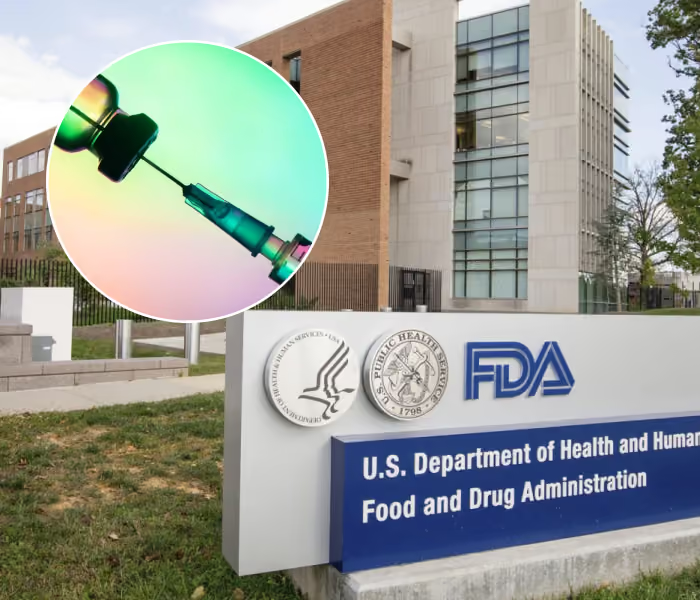


On July 23, 2026, an FDA advisory committee did something notable: it voted in favor of several popular peptides, over the objection of the agency's own scientists. If you have been peptide-curious, it is a real signal that the conversation is shifting. It is also widely misunderstood already. Here is what actually happened, what it does and does not change, and how to think about peptides safely from here.
The FDA's Pharmacy Compounding Advisory Committee voted 8 to 6, with one abstention, to recommend adding four peptides, BPC-157, KPV, TB-500, and MOTS-c, to what is known as the 503A Bulks List: the set of substances that compounding pharmacies are permitted to prepare. FDA staff had recommended against it, citing limited human evidence, so the vote went against the agency's own reviewers.
This is the part to get right. The committee's vote is a recommendation, not a final rule, and it is not binding. The FDA still decides whether to actually change the list. Nothing is "newly legal" today, and it is not a green light to buy peptides from anywhere you like. What it does signal is that regulated, pharmacy-compounded access to these peptides, the kind that runs through a provider, may be moving closer to the mainstream. For the fuller background on how supervised care works, see our guide to peptide therapy.
As headlines spread, so do the sellers. A large online market already sells these same compounds as "research only" chemicals, a label used to sidestep oversight, not a description of quality. And that market has a documented problem. Independent third-party testing of gray-market peptides has repeatedly turned up products that were mislabeled, underdosed, or contaminated, some containing only a fraction of the labeled active ingredient, some with heavy metals such as lead and arsenic, and some with bacterial endotoxins that can cause serious reactions when injected. One anti-doping analysis found more than one in five samples were mislabeled or contaminated. None of that is visible in the vial, which is exactly the danger.
The compound is not the variable that determines safety. Sourcing and supervision are. Done properly, peptides are prescribed by a licensed medical provider and compounded at a US-based, FDA-regulated 503A pharmacy that tests for identity and purity. At Thrivelab, every peptide we dispense comes through a vetted pharmacy with a certificate of analysis, documentation of what is in the vial and what is not, and a licensed provider reviews whether it is appropriate for you in the first place, with follow-up over time. That is the difference between peptide therapy and a gamble.
If the headlines have you curious, the smart move is not to grab a vial from an unregulated seller. It is to get informed with someone qualified. Being online is not the problem, plenty of legitimate care is delivered through telehealth. Skipping the provider and the pharmacy is. A licensed medical provider can tell you whether peptides make sense for your goals and history, and if they do, deliver them the accountable way. If they do not, a good provider will tell you that too.
Did the FDA approve peptides?
No. An FDA advisory committee voted to recommend adding BPC-157, KPV, TB-500, and MOTS-c to the 503A compounding list. It is a non-binding recommendation, not an approval or a final rule, and the FDA still decides.
Are peptides legal now?
Nothing changed the day of the vote. These peptides are often compounded rather than FDA-approved, and access still runs through a licensed provider and a compounding pharmacy. The recommendation is a step in a longer regulatory process.
Which peptides were recommended?
Four: BPC-157, KPV, TB-500, and MOTS-c (in their free-base and acetate forms). The committee voted 8 to 6 with one abstention.
Are online "research only" peptides safe?
They carry real risk. Independent testing has found gray-market peptides that were mislabeled, underdosed, or contaminated with heavy metals or bacterial endotoxins. "Research only" is a labeling workaround, not a quality guarantee.
How is Thrivelab different?
Every peptide is prescribed by a licensed medical provider and compounded at a vetted, FDA-regulated 503A pharmacy, with a certificate of analysis documenting identity and purity. You know what is in the vial, and a provider decides whether it is right for you.
Curious whether peptides fit your goals, the safe way? Talk to a licensed provider.
Educational only, not medical advice. This reflects an advisory committee recommendation, not FDA approval or a change in law. Peptides discussed may be compounded and are not all FDA-approved for the uses described. Individual results vary. Talk to a licensed medical provider about what is right for you.
.avif)
.avif)
.avif)


